Cambridge
  • Products and Services

    Products and Services

    • Products and Services

      Our innovative products and services for learners, authors and customers are based on world-class research and are relevant, exciting and inspiring.

    • Academic Research, Teaching and Learning
    • English
    • International Education
    • Education resources for schools
    • Bibles
    • Educational Research & Network
    • OCR
    • Cambridge Insight
    • Partnership for Education
    • Cambridge Dictionary
    • The Cambridge Mathematics Project
    • Bookshop
  • About Us

    About Us

    • About Us

      We unlock the potential of millions of people worldwide. Our assessments, publications and research spread knowledge, spark enquiry and aid understanding around the world.

    • What we do
    • Our story
    • People and planet
    • Diversity and inclusion
    • Annual Report
    • News and insights
    • Governance
    • Legal
    • Accessibility
    • Rights and permissions
    • Contact us
    • Media enquiries
  • Careers

    Careers

    • Careers

      No matter who you are, what you do, or where you come from, you’ll feel proud to work here.

    • Careers
    • Jobs
    • Benefits
選擇語系

Cambridge English

Main navigation

  • Products and Services

    Products and Services

    • Products and Services

      Our innovative products and services for learners, authors and customers are based on world-class research and are relevant, exciting and inspiring.

    • Academic Research, Teaching and Learning
    • English
    • International Education
    • Education resources for schools
    • Bibles
    • Educational Research & Network
    • OCR
    • Cambridge Insight
    • Partnership for Education
    • Cambridge Dictionary
    • The Cambridge Mathematics Project
    • Bookshop
  • About Us

    About Us

    • About Us

      We unlock the potential of millions of people worldwide. Our assessments, publications and research spread knowledge, spark enquiry and aid understanding around the world.

    • What we do
    • Our story
    • People and planet
    • Diversity and inclusion
    • Annual Report
    • News and insights
    • Governance
    • Legal
    • Accessibility
    • Rights and permissions
    • Contact us
    • Media enquiries
  • Careers

    Careers

    • Careers

      No matter who you are, what you do, or where you come from, you’ll feel proud to work here.

    • Careers
    • Jobs
    • Benefits
選擇語系
English
  • 首頁
  • 教育工作者與教育機構

    教育工作者與教育機構

    • 考試採認與驗證
    • 學校及教育機構
    • 績優備考學校
    • 高等教育與成人教育
    • 授權考試中心
    • 免費教師資源
    • 教師專業學習與發展
    • 教學資格認證與課程
    • 英語教育策略諮詢
    • 教育諮詢中心
    • 成為劍橋英語評量專家
    • 教育合作伙伴
    • Popular links

    • 2026年目錄
    • 有關劍橋英語認證績優學校的資訊
    • 授權考試中心查詢
  • 英語學習者

    英語學習者

    • 英語學習教材與資源
    • 線上免費學習資源
    • 認證與測驗

    • 獲得劍橋英語認證的方法
    • 授權考試中心查詢
    • 報名考試
    • 備考資源
    • 考試當日注意事項
    • 在英國學習英語
    • 出國學習英語
    • 簽證與移民用途
    • 線上查詢考試成績
  • 學習與備考資源

    學習與備考資源

    • 整合式學習與評量
    • 查看所有學習教材
    • 官方備考教材
    • 各項考試與測驗總覽
    • 領思前導英語測驗
    • 劍橋國際英語認證
    • IELTS
    • 劍橋領思英語認證
    • Occupational English Test (OET)
    • Michigan English Test (MET)
    • 劍橋英語分數量表
  • 社群

    社群

    • 教師社群
    • 英語學習者社群
    • 最新資訊
  • 服務與協助

    服務與協助

    • 遺失證書
    • 查詢與成績申訴
    • 特殊測試需求
    • 特殊情況考量
    • 違規行為
    • 投訴
    • IELTS
    • 進階協助

    • 聯絡我們
    • 聯繫銷售代表
    • Cambridge One 使用說明
  • Test your English
  • 預約考試
  • 全球認可
English

You are here:

  1. 首頁 | 劍橋英語
  2. 英語學習
  3. 幫助您的孩子學習英語
  4. 協助您的孩子
  5. How mistakes help you learn

Learn to love your mistakes

Learn to love your mistakes

Children often worry about making mistakes, but mistakes are an important part of learning a language! Everyone makes mistakes – from beginners to advanced learners, and native English speakers.

In our official Speaking guidance we say, ‘don’t worry about making mistakes. Communicating is the most important thing!’ A child who communicates a lot and makes a few mistakes is much more likely to develop their confidence and skills than a child who communicates very little because they’re afraid to make mistakes.

The psychology behind mistakes

Research tells us that giving your child the freedom and confidence to make mistakes creates better recall of new information. It will mean better learning outcomes for your child.

So what does this look like in practice? Well, we must of course give our children feedback to help them learn, improve and progress. But at the same time, we must be careful that our feedback does not discourage children from expressing themselves, taking risks and experimenting with language.

For example, let’s look at the difference between these two pieces of feedback: Child: ‘I go swimming last night.’ Feedback A: ‘Oh that’s nice, you went swimming last night.’ Feedback B: ‘No! You went swimming! Use the past simple for past events.’

We can see that Feedback A is a more positive way of acknowledging what the child has said, while providing feedback on accuracy. Feedback A encourages the child to continue with their story, whereas Feedback B is much more likely to make the child stop and hesitate to express themselves again for fear of making another mistake.

Top tips to try at home

It’s important to remember that communication is the goal and mistakes are secondary – just like in real life.

Here are a few tips to help your child feel comfortable making mistakes:

  • Don’t feel limited to the topics covered in your child’s English lessons. Sometimes the best communication is spontaneous or linked to your child’s favourite interests.
  • Let your child have fun with English. They might like to try new expressions they have heard, such as in their favourite cartoons or books.
  • Encourage funny answers, faces and voices! If the stress is not on speaking, but on being fun and silly, children often forget their fear of making mistakes.
  • Do not overcorrect during a conversation. If a mistake keeps happening, make a note of it and come back to it later.
  • Look relaxed so your child knows you are happy with what they are saying. Accept very short answers and mistakes. The important thing is for your child to say English words without worrying.
  • If you are not confident having a conversation in English, you might prefer playing a game instead. For example, What can you see? That car is red! I can see three buses!

For more tips, watch our video for parents and families supporting children learning English at home.

Support from Cambridge English

Making mistakes may seem strange, particularly when your child is working towards an exam.

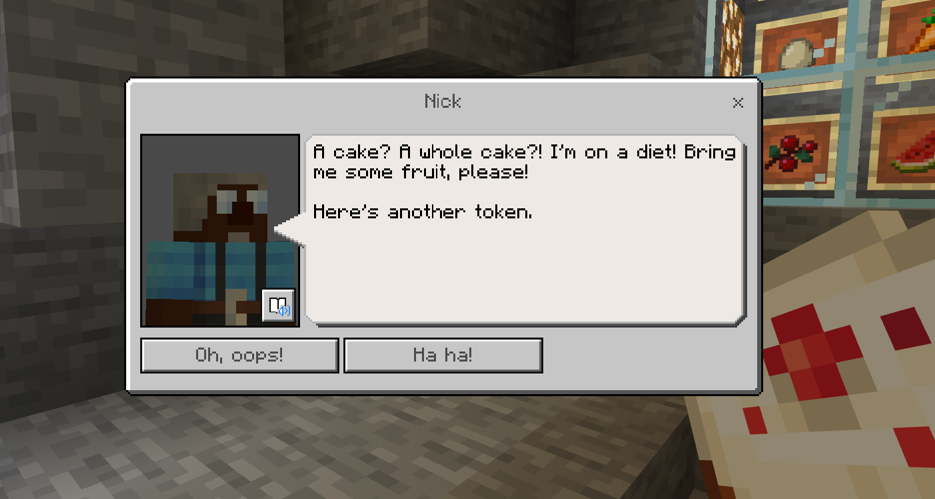
At the heart of all our exams and support, we encourage communication and making mistakes to learn, including in our exciting new language-learning experience built in Minecraft. English Adventures with Cambridge gives your child an authentic and immersive English language-learning experience that they can try at home.

The game is very far from a standard vocabulary or grammar exercise with a score at the end! Just like in real life, your child will receive feedback as they meet new characters, solve mysteries and complete puzzles. To take an example, players meet a hungry dwarf and they need to feed him exactly the right treat!
minecraft screenshot

Play our new Minecraft with your child!

We have created a fantastic new learning experience in collaboration with Minecraft. Help your child practise their English at home while having fun. 

Play English Adventures with Cambridge

Read more about how making mistakes can help to learn English in an article by our assessment expert Maija Kozlova.

本網站

  • 教育工作者與教育機構
  • 英語學習者
  • 學習與備考資源
  • 教師社群
  • 英語學習者社群
  • 服務與協助
  • 關於我們
  • 成效監測
  • 英語研究團隊
  • 全球認可
  • 諮詢
  • 研究
  • ALTE logo
  • English Profile logo
  • Cambridge University Press & Assessment
  • BSI Logo

檢視相關網站

  • 劍橋英語主要網站
  • 劍橋英語客服諮詢
  • Cambridge English Schools
  • 考試中心網站
  • Cambridge English for Centres
  • 線上劍橋認證準備中心
  • 測驗成績驗證服務
  • Occupational English Test
  • ALTE
  • 英語學習檔案
  • Cambridge University Press & Assessment
  • Michigan Language Assessment
  • Cambridge Assessment Japan Foundation


© Cambridge University Press & Assessment

  • 條款與條件
  • 資料保護
  • 保護政策
  • 無障礙網頁聲明
  • 網站導覽
回到最上頁